JAMAICA | Three days before Hurricane Melissa’s 185 mph winds ravaged the coast of Jamaica, caregiver Nateena Brown learned the storm would directly hit her hometown of St. Elizabeth.
“I started to brace myself,” Brown said. Recounting how the winds picked up the morning the hurricane hit, Oct. 28, 2025, Brown paused to collect herself. “Even now that it’s passed, when I’m lying down, I can hear the breeze,” she said choking back tears.
With windows boarded up for protection, she could only hear the Category 5 winds whistling past. The sound was hard to describe and unlike anything she’d heard before. At its peak, some boards blew off, shattering a rattling window she was trying to hold still with her hands. Miraculously, she was not cut.
Water reached her doorstep and poured in up to her ankles. She thought to herself, “What is going to happen to me now? I called out for Jesus so many times. I’m just glad and grateful it has passed. At one point, Melissa made me think, even the Lord forgot me. When I saw the things that were happening, I was wondering, God, where are you now? Your people need you more than ever,” she recalled.
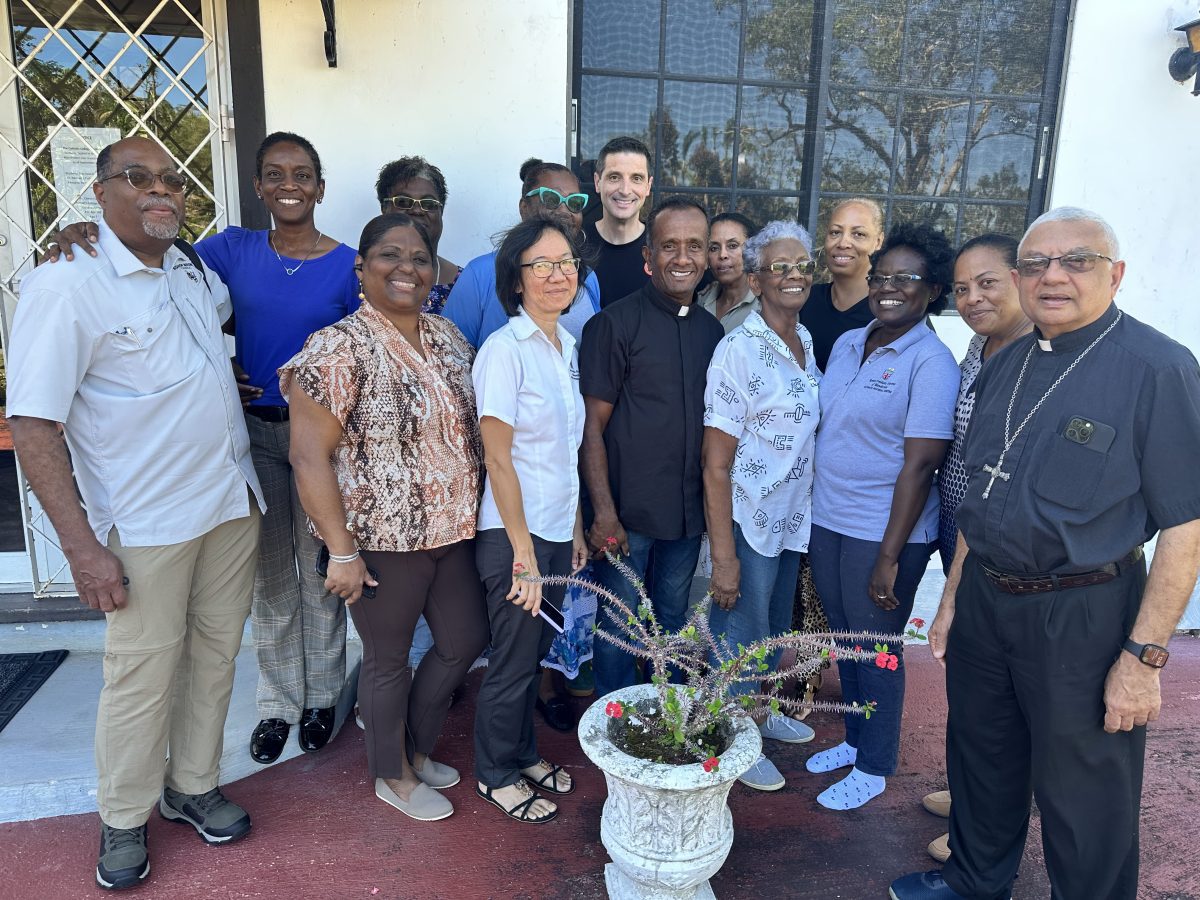
When she dared to venture out and learned no lives were lost, she felt the Lord’s grace. “I see His presence now in the people that are coming in to help,” she said. Helicopters delivering food, doctors checking in on the people, and the familiar faces of fellow Jamaican and Missionary of Mercy, Father Anthony Aarons and meteorologist Brian Shields. For Brown, it was a moment of joy amidst disaster, a light of hope.
The two went to Jamaica for what they describe as a “ministry of presence.”
“We stood with them and talked with them, because prayer is not just saying words. To pray is being in action, and that’s why we were there,” said Father Aarons. “And people recognize that, especially when we’re dealing with religious people. They recognize that as being prayer.” He likened the “tour of hugs” given and received in each town to Jesus with the children, taking them in his arms and blessing them.
Sister Emilia Malczak of the Sister Servants of the Most Sacred Heart of Jesus at the Holy Spirit Mission in St. Elizabeth told Father Aarons, “You have brought hope.” He found the statement significant, especially in this Jubilee Year of Hope. “And what do we know about hope? Hope does not disappoint,” he said.
Shields agreed noting, “the amount of people happy to see us coming,” was incredible and moving.
Shields is known to Jamaicans as “The Weatherman” because of his YouTube channel aimed at helping Caribbean nations be better informed about weather that will impact their lives.
And Father Aarons served his tiny island nation for years as vicar general for the Diocese of Mandeville, traveling and offering instruction on the liturgy. Joining them was Bishop John Persaud of the Dioceses of Mandeville and Montego Bay.
Shields, a parishioner of St. James Cathedral, was struck by the palpable trauma reflected in those they visited. Even with their own homes destroyed, they wanted to help their neighbor in whatever ways they could.
As they arrived in the rural town of Maggotty their second day, they noticed the bark ripped off the trees. The town, near St. Elizabeth, “was decimated”, said Shields. But because it is somewhat remote, it had received little help to that point. “You could see how under somewhat similar circumstances, you can feel alone,” Shields said. “It can be a very, very lonely and scary feeling as you don’t know where your next meal is coming from. There is no water, there’s no electricity, and you are living minute by minute. The people there that we hugged haven’t showered in three weeks.” Assuring the visit was not about him or Father Aarons he noted, “For somebody from the outside to show up in a small rural town takes away that ‘Does anyone care?’ question. They are seen. And even when we leave, they know we came, that they are not going to be forgotten.”
He noted how other parish priests in the dioceses also made a point of getting there right after the storm. It emphasized the importance of that ministry of presence. He said they tried to do what Mother Teresa of Kolkata did, be with the people and let them know they are loved.
As they traveled north toward Montego Bay, the evident, widespread destruction was overwhelming. Yet even there, they found God’s hand at work. Father Aarons recalled visiting a church that had lost its roof, but the sanctuary area of the church was intact. “The altar, the crucifix, the tabernacle, and so forth, it was just there as, what could you say, like a little oasis,” said Father Aarons. “So that struck me.”
Finding an outdated announcement on the wall of one of the churches he used to visit brought him back to the days he served there. But this time, rather than removing the old sign, he reflected on how pertinent its message was today. It read, “We are living stones,” referring to a past capital campaign. “So, we rebuild from these living stones,” he said. “We are His house, and the cornerstone is Christ Jesus Himself.”
The day before leaving they visited Falmouth, a Georgian heritage town in Jamaica which is losing that status because almost every building was destroyed. Father Aarons stressed this fact adds to the loss. “They’re losing more than their livelihood. They’re losing their identity,” he explained.
“The magnitude of devastation there—every single home and building had significant damage – if they were able to keep their roofs at all,” said Shields. “People were hungry. I could not have been more amazed at the strength of the people from Jamaica.” He noted three weeks after the storm, with nothing to call their own, not even their essential needs being met, the people were still trying to help each other.
Among their last stops was Blessed Sacrament Cathedral where Shields participated in Easter Mass earlier this year. “It was heartbreaking. The whole landscape was different,” he said noting the many fallen trees.
There they met with Deacon Powell Baldwin who texted Shields during the storm asking how much longer they would endure Hurricane Melissa’s rage. Shields replied there would be another two hours, then he did not hear from the deacon for another three days. He was trapped in his home surrounded by downed power lines. The reunion was heartwarming.
Shields said he went on this mission trip, “to see people and show them we do care, to be with them.” It was an extension of his weather forecasts. He plans to return with Father Aarons in the months ahead, so the people know they are not forgotten. He noted how, although Hurricane Melissa is the strongest hurricane to have ever hit the Caribbean, in the United States “Melissa became back page news very quickly, although it could take weeks, months, years to recover.” The top priority for this region is to rebuild schools so the children may continue their education, get two meals per day, and restore a sense of normalcy. Then they will restore the rectories so the priests can better serve their communities. Finally, they will repair the church buildings. When they return, Shields hopes they will be able to celebrate their progress, share a meal, and participate in Mass together to give gratitude as they look ahead to a better time.
By Glenda Meekins of the Florida Catholic staff, December 4, 2025