Editor’s note: Part two of a series on fertility treatments and the Church. This article explores Church teaching. Read Part one here.
ORLANDO | Despite Church teaching that opposes these actions, an estimated 80% or more of Catholics practice contraception and another large group has conceived by in vitro fertilization.
Father Peter Latouf, parochial administrator for St. Peter Parish in DeLand suggested, “Maybe they know it’s what the Church teaches, but they don’t understand the why behind it.”
That is why two years ago he chose to address fertility and contraception as Hot Topics in a series he presented at Holy Family Parish in Orlando. He carefully explained why the Catholic Church has issues with these treatments, in particular IVF and freezing of embryos, and broke it down into five moral concerns.
Separating procreation from the marital act
“When you start separating procreation from the actual marital act, then we are doing something contrary to God’s plan,” he said. “God’s plan is what unites this unitive act, which is the two members of the couple coming together as one, in the procreative act. And IVF and all these other forms, birth control, etcetera, they disassociate those two.”
Issued by St. Pope Paul VI in July 1968, on the heels of the controversy over the birth control pill, Humanae Vitae’s main message is that conjugal love must always combine a mutual bond of love (the unitive dimension) with an openness to creating new life (the procreative dimension).
Father Matthew Hawkins, pastor of Annunciation Parish noted, “The Church has always taught that children, together with the union of the spouses, are a good of marriage. She continues to echo God’s words to Adam and Eve in the Garden to be fruitful. However, this fruitfulness must be the direct result and cannot be separated from the conjugal act of a husband and wife. Medical aids and scientific procedures can be used to assist that act but not intervene. It is the union of the husband and wife, and the complementarity of their love, that reflects the perfect love of God and allows them to cooperate in creation according to His plan. The child, for their part, has a right to be the culmination of such an act of love.”
The problem of multiple embryos
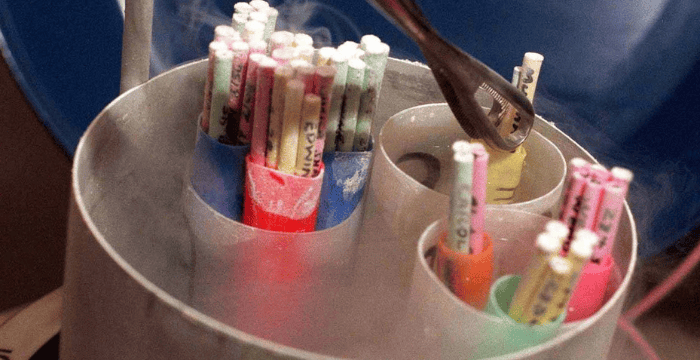
“The church’s concern is mostly for what do we do with those embryos, of course, because IVF produces multiple embryos and some get transferred, but many get frozen. Many also get discarded or lost. And, of course, in the Church we believe an embryo is human life from the moment of conception. So just throwing it away or freezing it, well, that’s obviously gravely wrong,” said Father Latouf.
Although the Bible does not explicitly state life begins at conception, it has been the teaching of the Church since the beginning, based on various scriptural passages.
• Jer 1:5 states, “Before I formed you in the womb I knew you, and before you were born, I consecrated you.”
• Lk 1:41: The leaping of John the Baptist in the womb of Elizabeth when Mary arrives, which is often interpreted as recognizing personhood before birth.
• Evangelium Vitae 44-45 mentions these passages adding they “respectfully and lovingly speak of conception, of the forming of life in the mother’s womb, of giving birth and of the intimate connection between the initial moment of life and the action of God the Creator.”
Through reason and tradition, it teaches this principle is supported by both divine revelation and the biological understanding that a unique human is created at fertilization.
Every child has rights
The Catechism of the Catholic Church affirms Scripture stating human life must be respected and protected absolutely from the moment of conception (CCC 2270).
“Every child has a right to be born of his or her own father and mother. And so, when we’re talking about not just IVF, but also things like donor eggs or donor sperm or surrogacy, then essentially what we’re doing is we’re letting scientists, doctors, take over what should be an action that’s unique to spouses,” Father Latouf said.
Donum Vitae states, “The human being is to be respected and treated as a person from the moment of conception; and, therefore, from that same moment his rights as a person must be recognized, among which in the first place is the inviolable right of every innocent human being to life.”
Loss of life
Statistics gathered in the United Kingdom in 2012 indicated almost half the embryos used to help women conceive through IVF were thrown out in the process. The statistics were gathered by the Human Fertilization and Embryology Authority (HFEA). The fertility industry regulator recorded IVF processes from 1991 to 2012. According to an article published on the GeneologyandGenetic.org website, during that time, more than 3.5 million human embryos were created, producing only 235,480 “gestational sacs” or evidence of successful implantation.
“A lot of the embryos get lost and so only a fraction of embryos actually survives to live birth and so there’s a whole big structural loss of life that’s bound up in IVF,” explained Father Latouf.
Pre-genetic Testing (PGT)
The final issue is pre-genetic testing (PGT). PGT is designed to find abnormalities in the embryos and/or fetuses. “Abnormal” embryos are typically discarded. In the case of abnormalities found in the fetus, parents are given the option to terminate the pregnancy.
Father Latouf cautions, “There are even some clinics that will allow a selection of the sex of the baby if the genetic testing is showing a problem. So therefore, we’re getting a little close to eugenics, where we’re just saying, well, this isn’t what I want; it’s not the baby I’m designing in my mind, and so we can just treat it with selective reduction.”
Father Latouf points out, “Human life, of course, is sacred. It’s sacred from the moment of conception. And an embryo is not what I think most of the world calls a potential person. It is a person. It’s a human being, just at a very early stage. And so, if you’re creating many, many embryos and you’re freezing them or you’re throwing away the extras, well, you’re treating human beings as expendable. And a child, of course, is meant to be begotten, not made, which is what we say during our Creed every Sunday, you know, conceived through that act that’s unitive and procreative.”
Thus, “Even children who are already born of IVF are good, even if the process itself is morally wrong in a sense.”
Having counseled couples unable to conceive, Father Hawkins added, “My heart breaks for them. I know firsthand the ache of not having children, yet I still cannot possibly comprehend their pain since my situation occurred by choice, and theirs was not.”
The Church too recognizes this, yet it states, “The desire for a child cannot justify the “production” of offspring, just as the desire not to have a child cannot justify the abandonment or destruction of a child once he or she has been conceived.” (Dignitas Personae, 16)
He said, if they are open, he directs couples to the St. Paul VI Institute, to other couples who share the struggle, and to a larger understanding of the fruitfulness of marriage and parenthood.
“Many people do not know what the Church teaches and are influenced much more by the louder voice of the culture than good catechesis,” Father Hawkins said. “If they happen to know what, they rarely know why. Once they are shown the Church’s moral teachings, especially in sexuality, are not simply impositions from an authority, but are truly in accord with human flourishing and relational happiness, they often make the necessary sacrifices.”