ORLANDO | A message of hope, healing and faith in God’s merciful love was proclaimed throughout the fourth annual Mass for Suicide Prevention and Remembrance at the Basilica of the National Shrine of Mary, Queen of the Universe Sept. 12, 2026.
“This is a Mass of healing. It’s a Mass of awareness. It’s a Mass of hope,” said Father Ivan Olmo, rector of the basilica.
“We come to mourn and weep, but we also come with a consolation of God’s love and mercy in our lives,” added Bishop John Noonan, who celebrated Mass. “We remember in a special way those who have lost their loved ones. And we pray for anyone who may be struggling with sadness, loneliness, and despair, that they may know that they are loved, that their life is precious, and that they are not alone.”
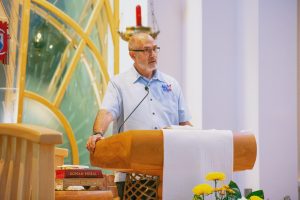
Before Mass began, Father Olmo invited Joe Gallagher, founder of Ali’s Hope Foundation, to share a few words. Gallagher began the foundation after losing his daughter, Alyson, to suicide in 2007, one month before she turned 22. Gallagher and his wife relied on their faith and the support of Annunciation Parish in Altamonte Springs during this difficult time.
“Out of the pain of losing Ali came the desire to do something that could make a difference in the lives of other young people,” said Gallagher, who added his goal was simple. “If we can save one life, it (is) well worth it.”
As he began to partner with different organizations to create resources and help guide people in dealing with mental health struggles, he came to the realization that a one-size fits all approach was not entirely effective.
“What we’re doing is not enough, we really need to be on campus,” Gallagher said.
Ali’s Hope has established hope hubs and wellness clubs at eight different high schools across Seminole County.
“The hope hub is a safe place and welcoming place within the school for students, (who) can connect with trusted adults and their peers,” Gallagher said. “Hope hubs are becoming a resource within the schools that students know they can trust.”
Through their presence in high schools, they have learned young people need relationships with trusted adults, connections with their peers, and places where they feel safe. Last school year, Ali’s Hope wellness clubs and hope hubs recorded 3,492 visits from students in just two high schools.
“Suicide prevention doesn’t begin with a young person reaching crisis. It begins long before the crisis,” notes Gallagher. He says suicide prevention starts by creating connections, giving young people a sense of belonging, and helping them develop healthy ways to cope with the challenges in their lives. “One of our messages of Ali’s Hope is so simple, ‘just ask,’” said Gallagher. “Ask the question. Start the conversation. Listen. And if someone needs more help than we can provide, help connect them with someone who (can).”
Gallagher pointed out everyone plays a role in suicide prevention. “I hope we remember suicide prevention isn’t only the responsibility of counselors, schools, foundations, or clergy. It belongs to all of us,” said Gallagher. “I believe our churches, our Catholic schools, and youth ministries can be an important part of the circle of support.” Gallagher hopes to bring hope hubs to Catholic schools and parishes throughout the diocese. “I would welcome the opportunity for Ali’s Hope to work with the diocese and explore how we can take some of what we’ve learned… and use it to reach even more young people.”
In his homily, Bishop Noonan shared personal insights into facing immense suffering and grief firsthand. “In my priestly life, I’ve encountered much tragedy, much suffering. I’ve also encountered much hope and peace and faith and love.”
He recalled ministering to a woman whose two sons became addicted to heroin and later died of AIDS within a week of each other. Bishop Noonan still recalled the poignant words she shared with him after her second son’s funeral.
“She said, ‘Father, I am going to go home tonight. And this is the first time in many, many years that I can go to sleep and rest peacefully, because I know my two sons are with the Lord.’”
Throughout the basilica, many nodded in agreement, having felt a similar sentiment after losing a loved one. “That’s what it is to have faith,” said Bishop Noonan.
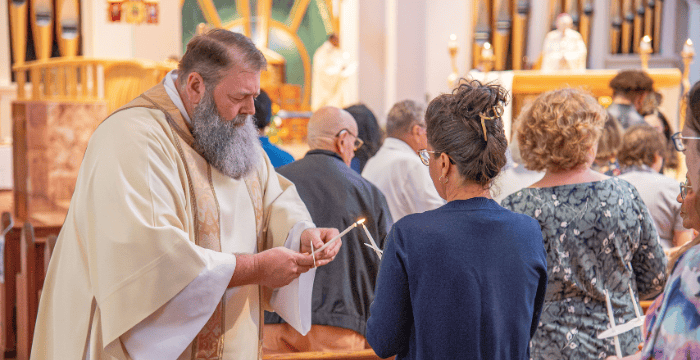
After the homily, two deacons lit candles from the flame of the Paschal candle. Representing the light of Christ dispelling the darkness and despair, the deacons proceeded to light candles held by those present throughout the basilica during a litany of intercession.
“The Church must never turn away from people who are hurting,” said Luis Nieves, director of pastoral ministry and family life for the diocese. “You do not have to walk through this world alone. The Church is here with open arms.”
As the liturgy concluded, Nieves reminded those whose lives have been marked by the suicide of a loved one to remember one important message. “There is hope and healing is possible.”
By Lucas Blackwell of the Florida Catholic staff, September 17, 2026